Journal
Authorship is judgment, not typing
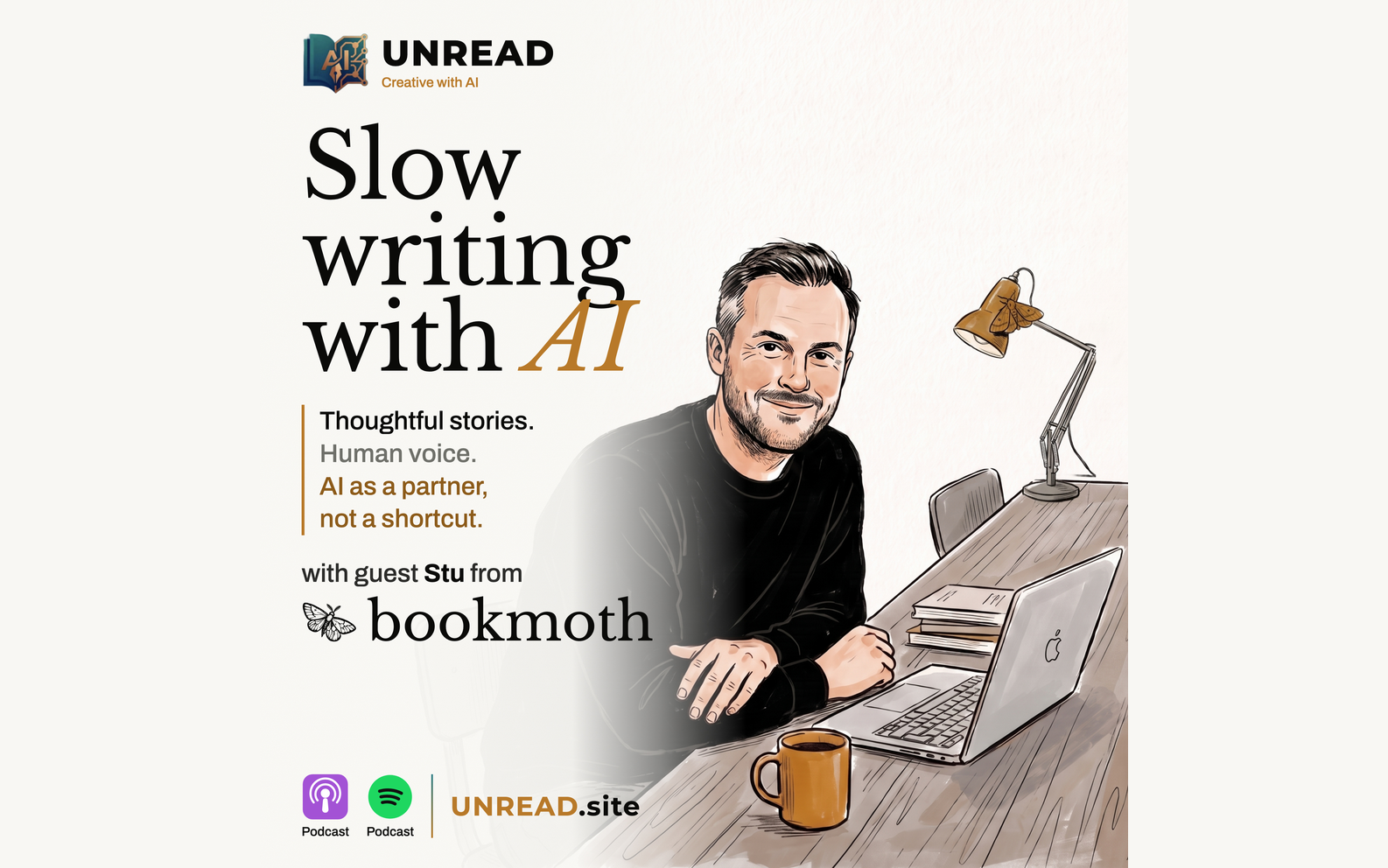
I went on the Unread podcast to talk about writing slowly with AI. Nearly every pitch for AI in writing is a pitch about speed, and speed is the wrong thing to buy. What you lose when you go fast is the deciding, and the deciding is where books get made.
Listen and read →
The AI writing tells you can't edit out
A new University of Maryland and Google DeepMind study analysed 61,608 stories from five AI models. You can strip the em dashes and kill "delve": the machine is still visible 93% of the time, because the tells were never in the words. They're in the story. Model by model, here's what it found.
Read the essay →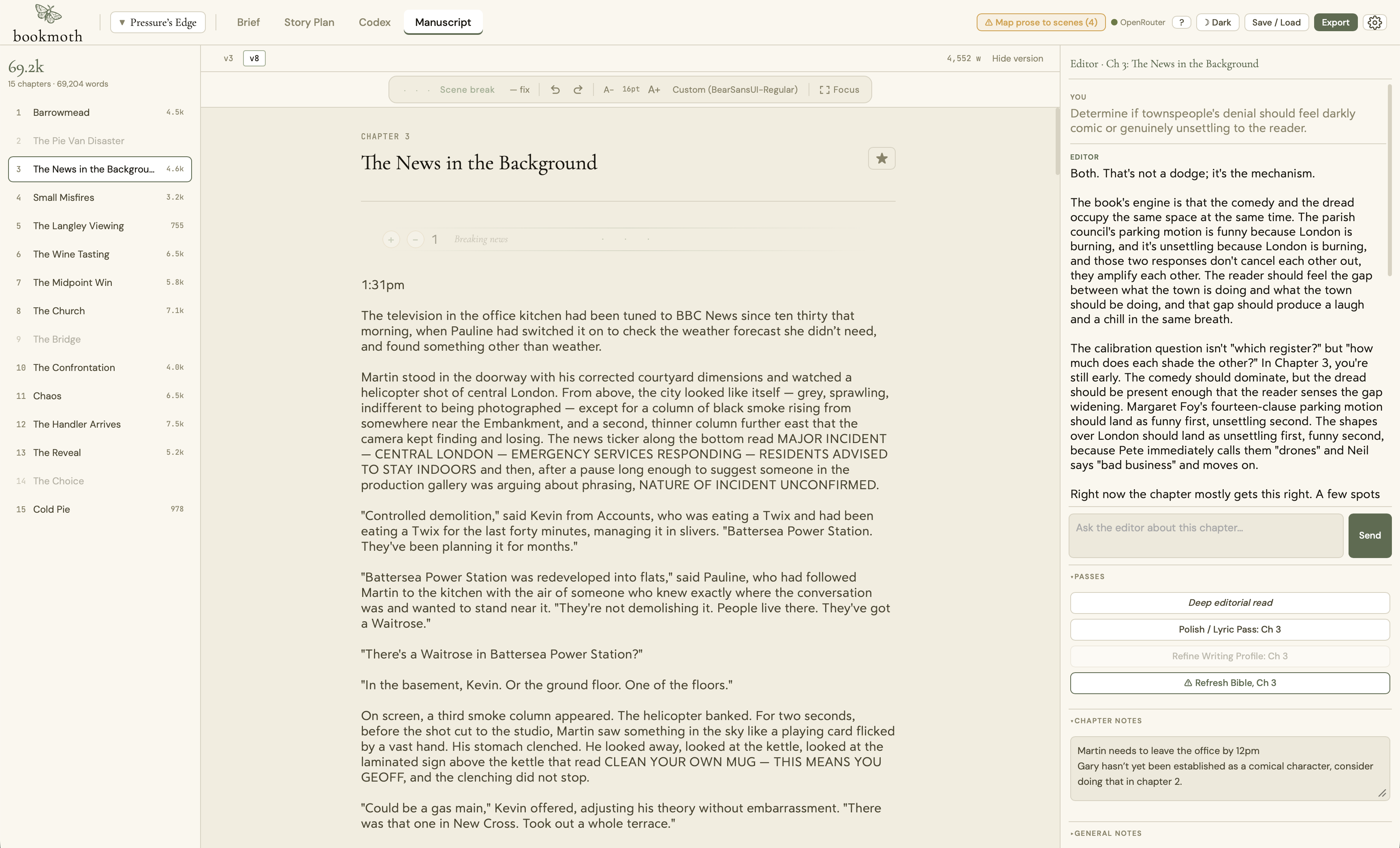
What's new in bookmoth 2.3.3
Two releases in one. A Story Plan you can pick up and rearrange scene by scene, essays and articles alongside novels, a live view of every draft, a sharper editor that keeps your plan and codex in step, a paste that finally holds, and themes you can build yourself. One purchase, no subscription.
Read the release notes →
AI doesn't just change your style. It overwrites your voice.
Writers have said it for years: AI drafts don't sound like them. In 2026 the research caught up. A peer-reviewed study found heavy AI use overwrites your lexical fingerprint, with 50% fewer pronouns and blander meaning, even on a light edit pass. Here's what the studies show, and the architecture that stops it.
Read the essay →
Why your first draft doesn't sound like you
Your draft is technically fine and somehow has no owner. The reason is that you edit your real voice out before you recognise it, sentence by sentence, in the belief you're improving the work. Here's how to get it back on revision.
Read the essay →
bookmoth 2.1 is here, and it leaves the subscription tools behind
A conversational editor that reads your live prose, a story bible that builds itself, voices for your characters, and a faster engine. The biggest bookmoth release yet, and still a one-time purchase with your words on your machine.
Read the update →
How to make AI writing sound like me: a new ACL paper just measured what works and what doesn't
A recent ACL paper gave the field the first proper methodology for measuring voice preservation in AI writing. The findings are useful in both directions: where the popular workflow falls short, and what kind of tool can do better.
Read the essay →
Looking for an AI writing tool that preserves your voice? A new paper proves the opposite category exists too.
A 2026 paper just demonstrated that AI can hide your writing voice from automated detection. Two weeks earlier, another paper showed AI flattens your voice unless you stop it. AI writing tools have split into two opposite categories. Here's where bookmoth fits.
Read the essay →
Which AI writing tools actually preserve your voice?
A 2026 Berkeley study confirmed what writers using Claude, ChatGPT, Sudowrite, and NovelCrafter have been saying for years: prompts can't preserve voice. Here's the architecture that does, and why most current AI writing tools fail at long-form voice preservation.
Read the essay →
The Claude / Piper experiment is a craft story, not a privacy story
Claude Opus 4.7 just identified a journalist from 125 words she'd never published. The mainstream coverage has framed it as a privacy story. For writers using AI to draft fiction, the more important implication is about voice as a measurable craft constraint.
Read the essay →
How to find your writing voice (without faking it)
Voice is the most talked-about thing in writing advice and the least well defined. A practical guide to recognising the patterns your prose is already making, protecting them from your own self-editing, and trusting what you've got.
Read the essay →