2.1 took the two features writers asked about most, the story bible and the editor, out of beta and let them off the leash. Both are deeper, both are more powerful, and the whole app is faster underneath. Here is what changed, and why it matters.
The codex: a story bible that builds itself
The Bible tab has been in beta for a while. In 2.1 it comes out fully formed as the codex, a real reference for your whole world rather than a notes list.
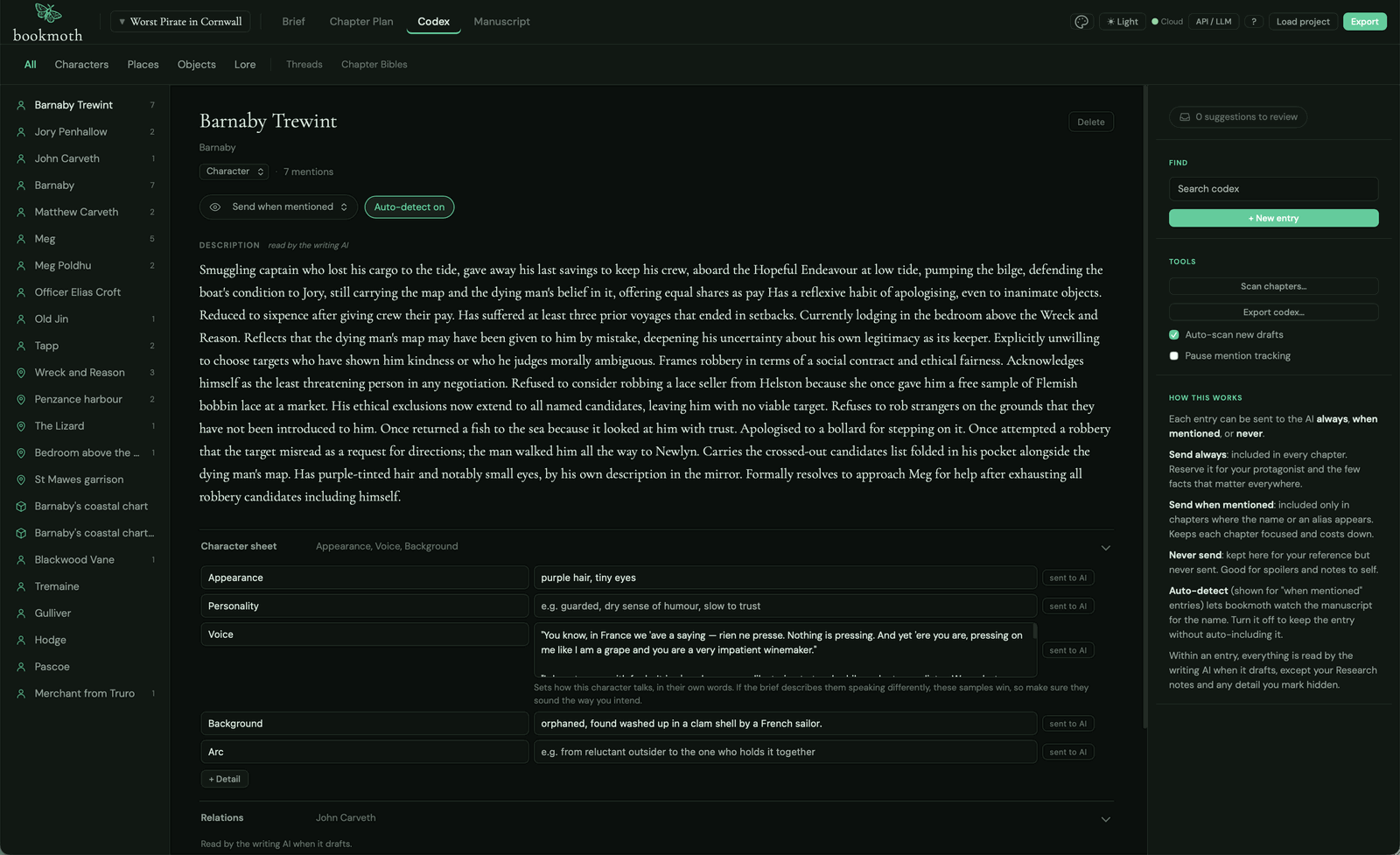
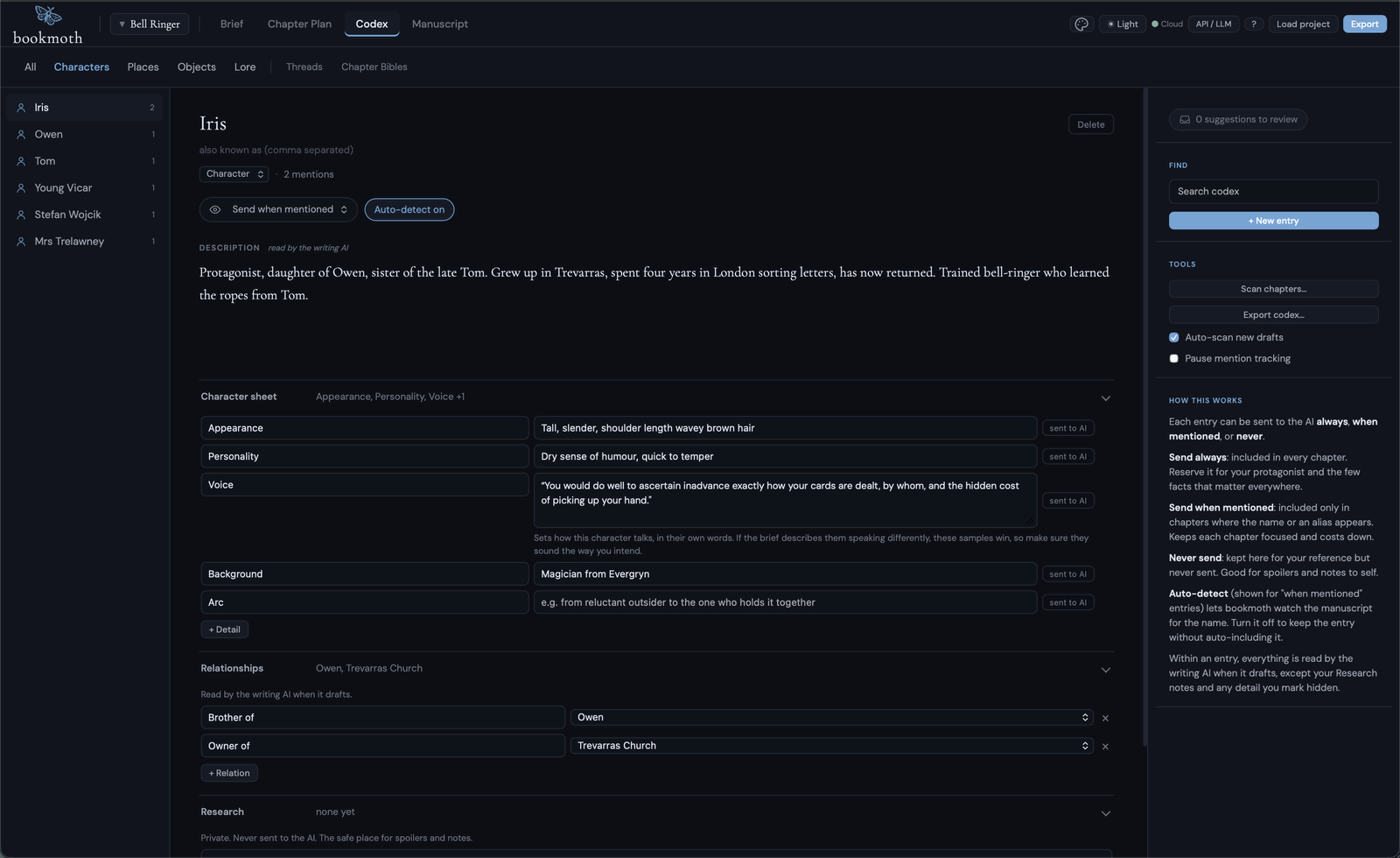
- Structured entries for characters, places, lore and items, with aliases so “Barnaby”, “the captain” and “Cap’n” all resolve to one person.
- Voices for your characters. Give a character a handful of example lines and bookmoth writes their dialogue in that voice, the same way it already writes your book in yours.
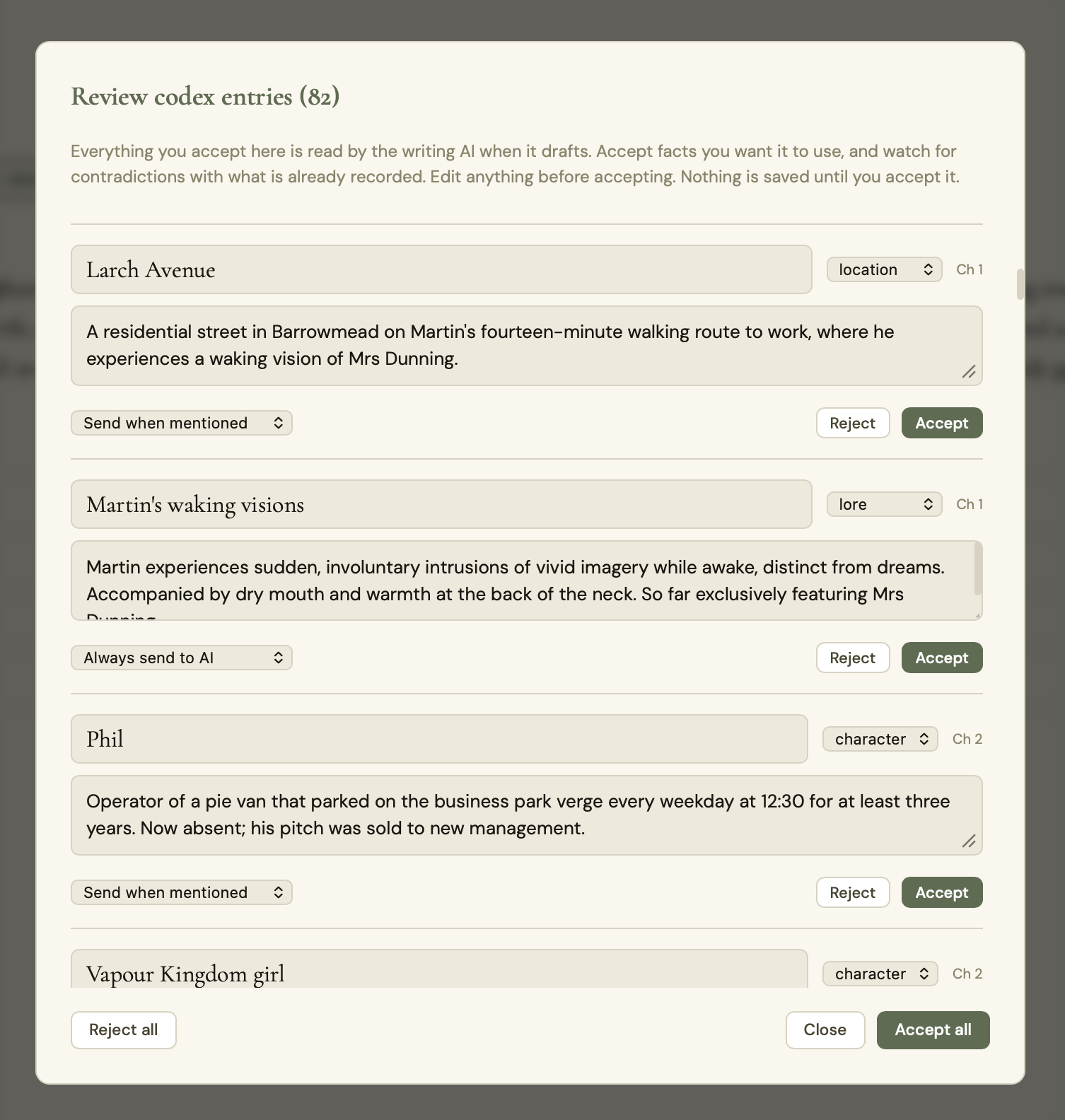
- It populates itself, with your approval. bookmoth scans your drafted and imported chapters, proposes new entries for review, and flags contradictions before they become canon.
- You decide what the AI sees, per entry and even per detail: always send it, send it only when that character or place comes up, or keep it private and never send it.
- It stays fast and cheap. Only the entries relevant to the current chapter are sent in full, the rest as a one-line index, so a deep bible never slows you down, even on local models.
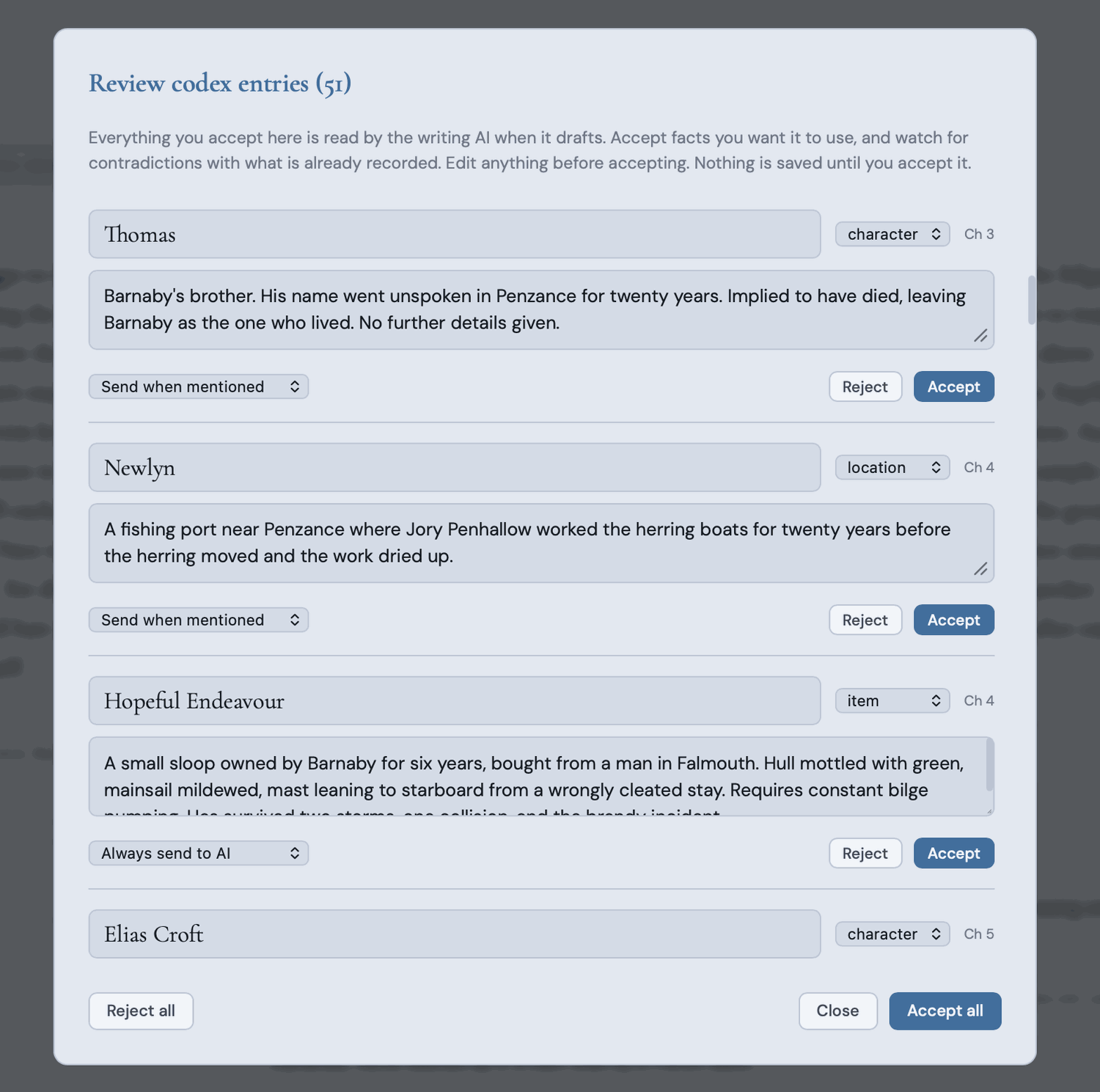
NovelCrafter makes you build the codex. bookmoth builds it for you.
The editor, unleashed
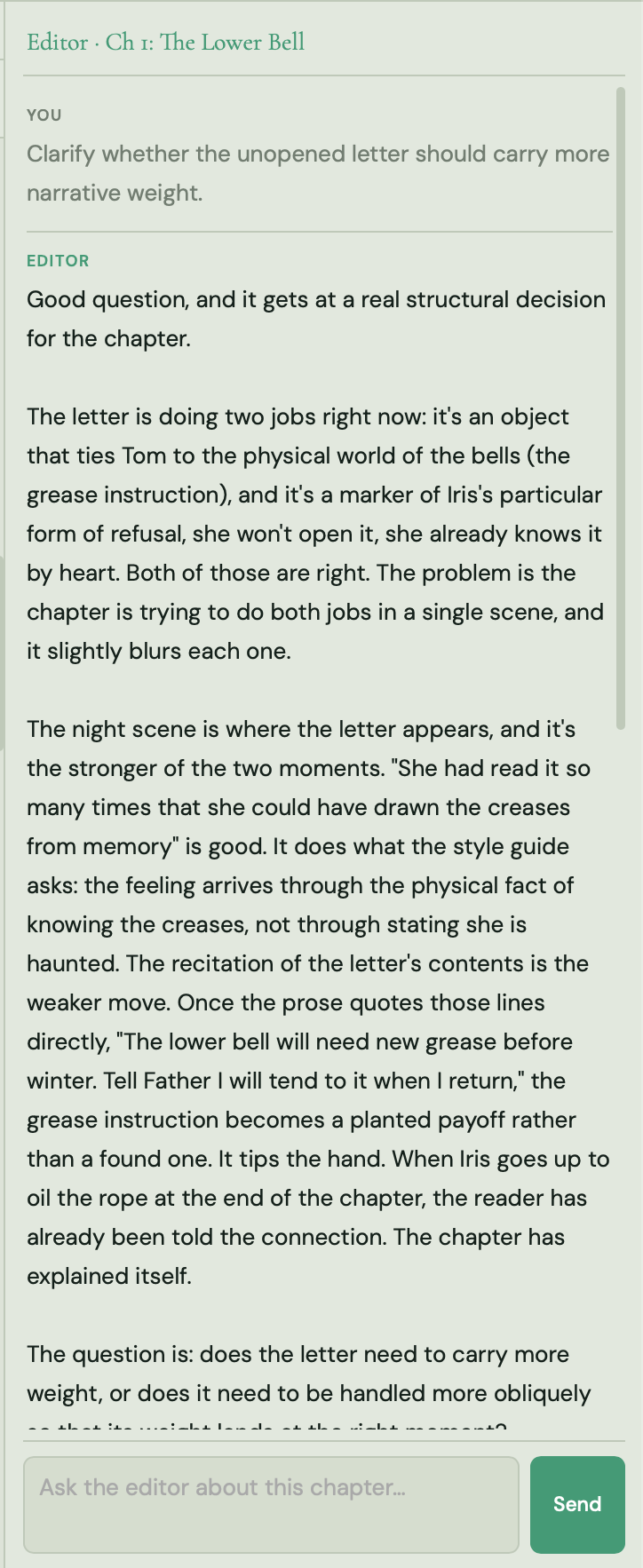
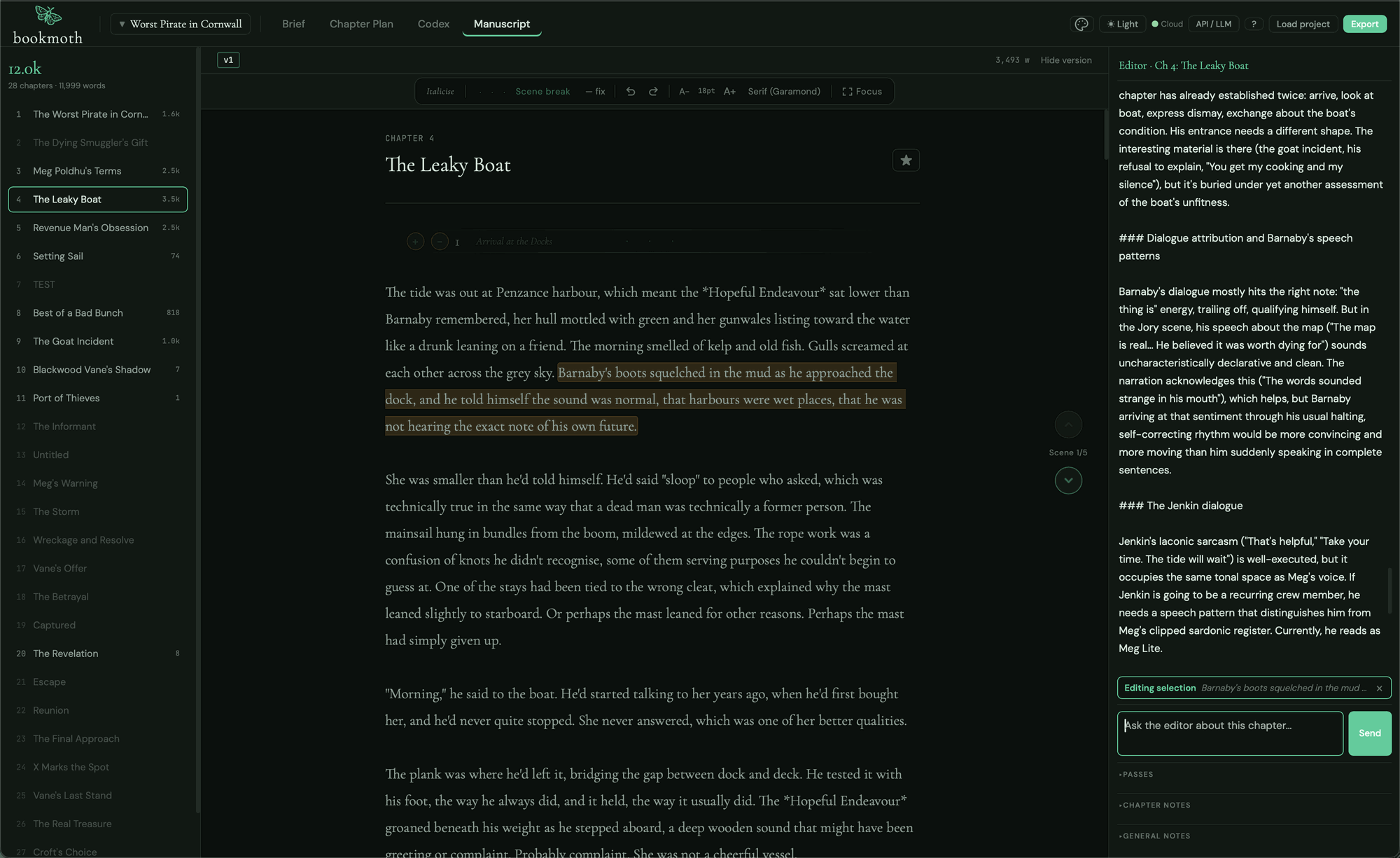
The editor chat now lives in the Manuscript page and stays synced to the chapter you are working on, so it is always reading your live prose, your brief, your profile, the plan, and the codex entries that matter. This one came straight from a user request: the old constraints are off, so it talks like a colleague now, not a form.
- Edit by conversation. Ask it to tighten a passage, raise the tension, or check for continuity slips, and it answers like someone who already knows your book.
- Reshape structure by talking. It can now tweak your chapter cards and scenes through the chat, not just your prose.
- Highlight to edit. Select a sentence, say what you want, and it proposes a change to just that selection, shown as a diff you accept or dismiss.
- Replies stream in as they are written, with a Stop button for when a note is heading the wrong way.
- Nothing is written silently. Every change goes through a diff you review and saves as a version you can roll back.
Scene labels, so you can see the shape at a glance
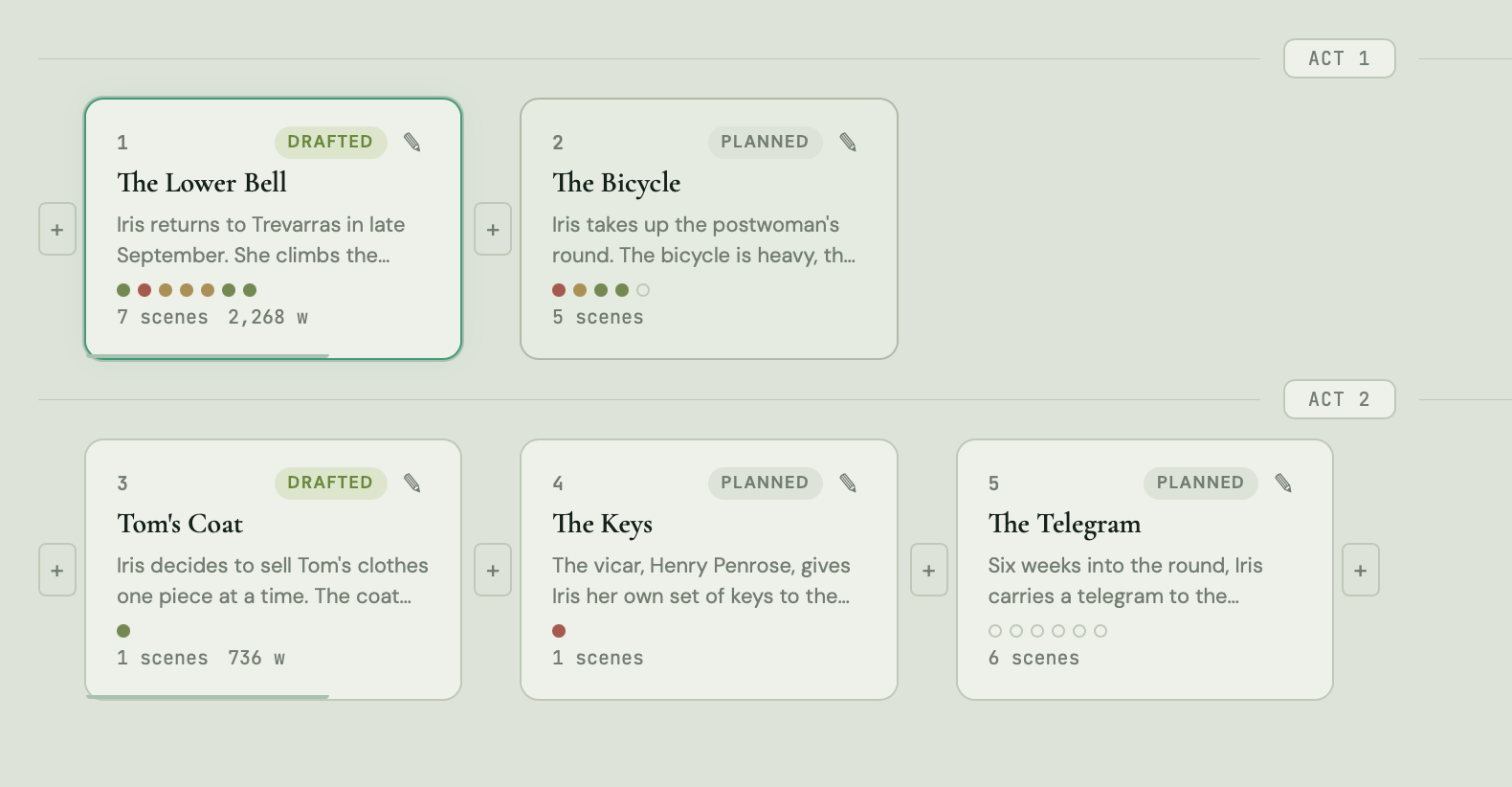
Long books get hard to navigate. 2.1 adds scene labels, a quick way to tag where each scene is in your process and read a chapter’s progress without opening it.
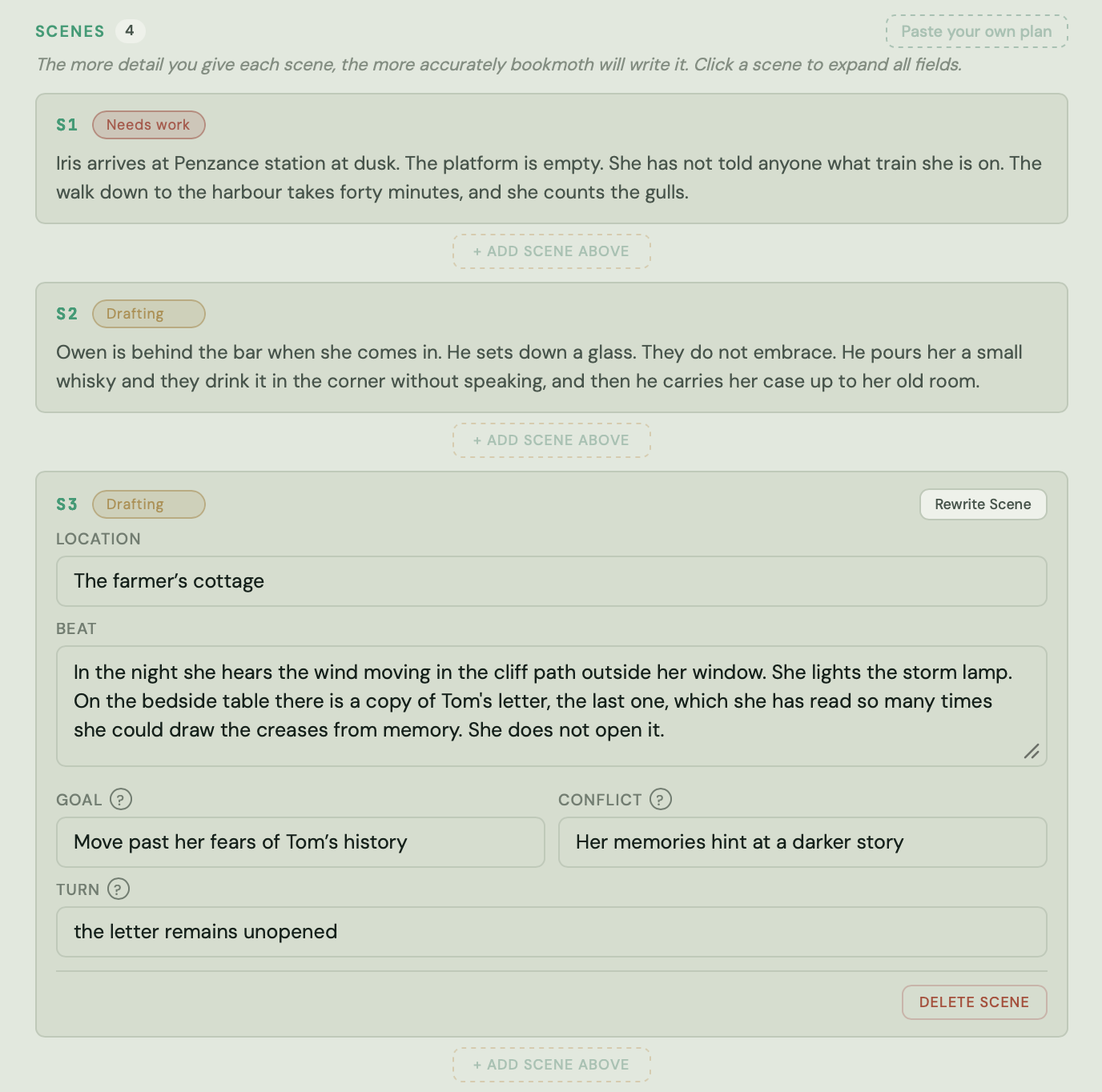
- Tag any scene as To draft, Drafting, Needs work, or Done.
- See it on the chapter plan. Each chapter card shows a row of coloured dots, one per scene, so the state of a whole chapter reads at a glance.
- Purely yours. Labels are for your navigation and progress only. They never feed the AI or change a word of your draft.
Faster, cheaper, and reading your live text
- Streaming on every connection: Anthropic, OpenRouter, and local models through Ollama or LM Studio.
- Prompt caching makes the first message in a chapter the slowest and every follow-up markedly quicker and cheaper.
- Always your live prose. Editing your text refreshes the cache, so the editor reads what is on the page now, never a stale snapshot.
- Sharper revisions. Diffs highlight changes word by word, and redrafting a scene-tracked chapter preserves your scene breaks.
New colourways, to celebrate
A big release deserves a little ceremony. 2.1 adds new in-app themes, each with its own light and dark, and a live picker that reskins the whole app as you flip between them.
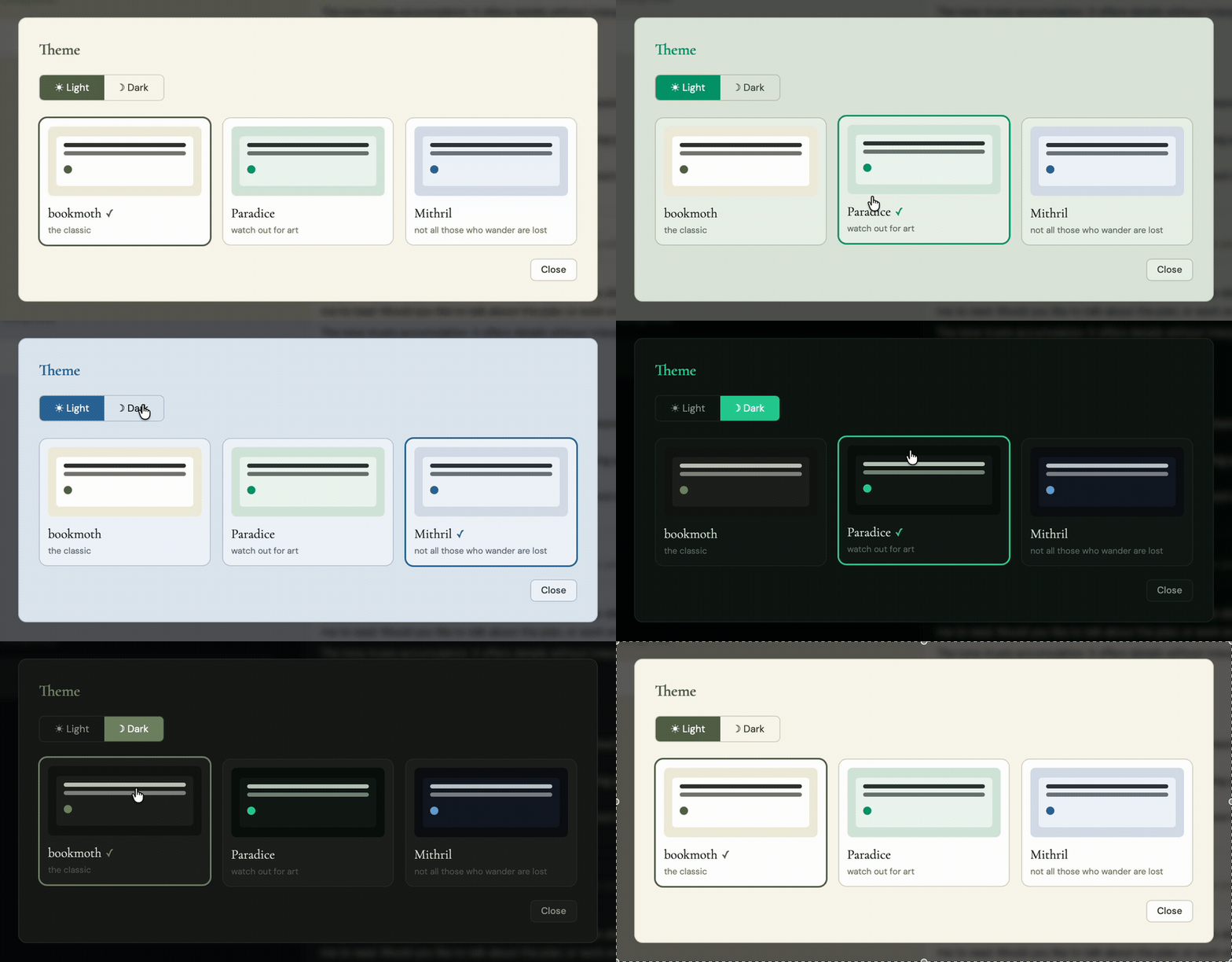
- bookmoth, the classic parchment and sage.
- Paradice, a cool lab-green by day, a bioluminescent dark by night.
- Mithril, cold slate blue and forged silver.
What has not changed
- One-time purchase. No subscription, ever.
- Bring your own key. Your words and your API keys stay on your machine.
- No server in the middle, and no training on your work.
- The AI never changes your manuscript on its own. Every edit is reviewed and reversible.
That is the whole idea behind bookmoth: a serious tool for serious writers, with the writer in control the entire way through. 2.1 makes it deeper and faster without giving an inch on any of that.